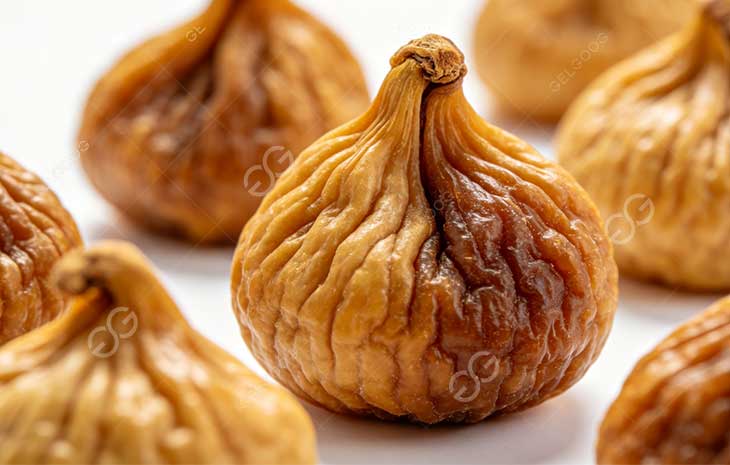
Figs can be consumed fresh or processed into various products, such as dried figs, fig jam, and other food items. Among these, dried figs—which are easy to store, convenient to eat, and have a relatively long shelf life—hold significant value in the snack, bakery, and health food markets.
Processing fresh figs into dried figs not only extends their shelf life but also increases the fruit’s added value. So, what is the dry fig manufacturing process?
Main processing workflow for dried figs:
Producing dried figs requires the design of an appropriate processing workflow based on factors such as the maturity of the raw material, product specifications, moisture content requirements, and intended end-use. In general, the complete processing workflow for dried figs includes:
Selection of raw materials → Washing → Draining → Drying → Cooling → Packaging
Drying is the most critical stage in the entire process of producing dried figs and is the key factor that determines product quality. Processors may use hot-air circulation dryers or other drying equipment suitable for fruit processing. By controlling the drying temperature, duration, airflow velocity, and air humidity, the moisture inside the figs is gradually evaporated.
Common drying equipment:
1. Hot-air circulation dryer
Hot-air circulation dryers operate by heating the air and using a fan to circulate it throughout the drying chamber, thereby drying the material. These units typically feature a multi-layer tray design, allowing for the processing of large quantities of figs simultaneously.
2. Heat pump dryer
Heat pump dryers utilize a heat pump system to both heat and dehumidify the air, enabling drying to take place under relatively mild conditions.
For fig-processing enterprises that prioritize controlling product color and texture while also focusing on energy efficiency, a heat pump drying system is an excellent option.
3. Continuous drying equipment
For food-processing enterprises with high production volumes, continuous drying equipment is a viable solution. Figs are transported into the drying zone via a conveyor system and undergo a continuous drying process within the unit—an approach well-suited for large-scale production requirements.
As a professional supplier of drying equipment, we provide customized drying solutions tailored to our clients’ specific production requirements. From equipment selection and capacity design to temperature control and overall facility layout, we develop optimal configurations based on the characteristics of the raw materials, target production capacity, and the conditions of the client’s production site.